In which we address the burning question, “Do you prefer that allocated bourbon because you’re **supposed** to or because you actually enjoy it?”
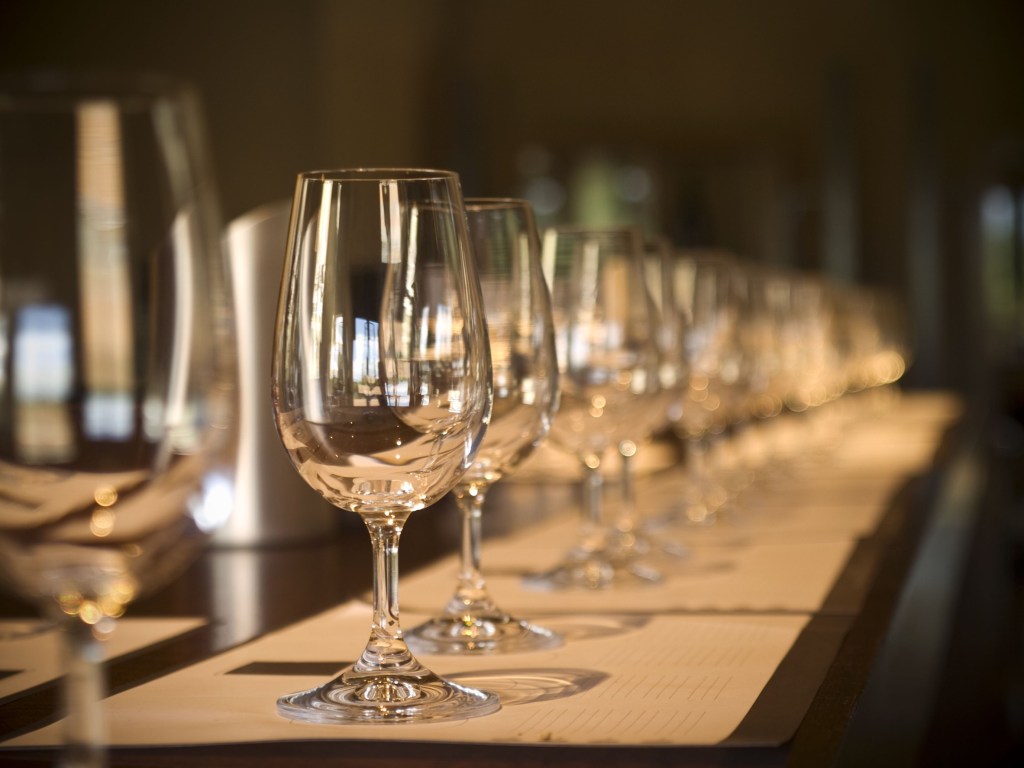
Warning: Actual tasting experience ahead.
Related spoiler alert: Tasting bourbons “blind” may change your mind about what you love.
As a marketing guy, I believe there is only a faint, fuzzy boundary between brand marketing and economics; both are hugely about perceived value, and nowhere is this more plainly true than in bourbon marketing. Here’s a case study on that point.
Bourbon craze-iness
On October 4, 2022, the Buffalo Trace Distillery announced its 20th annual release of all six Van Winkle expressions, and here are the company’s suggested retail prices (SRP) for the coming year:
Old Rip Van Winkle Handmade Bourbon 10-Year-Old 107 proof: $69.99
Van Winkle Special Reserve Bourbon 12-Year-Old (90.4 proof): $79.99
Van Winkle Family Reserve Rye 13-Year-Old (95.6 proof): $119.99
Pappy Van Winkle’s Family Reserve Bourbon 15-Year-Old (107 proof): $119.99
Pappy Van Winkle’s Family Reserve Bourbon 20-Year-Old (90.4 proof): $199.99
Pappy Van Winkle’s Family Reserve Bourbon 23-Year-Old (95.6 proof): $299.99
Of course, if you believe for a nanosecond that you can buy Van Winkle bourbons for anything close to these prices, I’m here to tell you that I am Tsar of all the Russias, and I have a bridge in the Sonoran Desert I’d like to sell you.
According to BoozApp—a service that finds and averages published SRPs and “shelf” prices for spirits in retail stores and online—the average shelf price for the Van Winkle Special Reserve 12-Year-Old Bourbon is … $1,100. I’ll just pause a moment while you calculate how many multiples of its $79.99 SRP that is. … Done yet? … Among the more affordable Pappy substitutes from Buffalo Trace, a 750ml bottle of the highly regarded Weller 12 Year bourbon has a suggested retail price of $40, while its average shelf price is $250. And on it goes; I won’t depress you with the numbers for those other Van Winkles.

The simple reason anyone gets away with such robber-baron markups on any bourbon is that too many people are willing to pay those prices. Marketers call that “brand equity” and accountants call it “good will,” but I call it craze-y. Sure, this is American free enterprise, but many, many of the places consumers pay that kind of money for Van Winkle and other allocated bourbons are in the “secondary market,” which is full of scalpers, scammers, counterfeiters, and other unsavory characters.
Seriously? Only buy your bourbon from a local retailer who looks at you the way your favorite pet does.
But okay, assuming they’re genuine, are those bourbons worth that kind of money? I think not, and I have a little story for you to make the point.
That time a $20 bourbon showed as well as Van Winkle Special Reserve 12 Year
Earlier this fall, I invited 13 of my bourbon-loving friends to a blind tasting I entitled, “Who’s Your Pappy?” I poured one-ounce samples of five bourbons for each participant. One of the samples, I told everyone in advance, was Van Winkle Special Reserve 12 Year Bourbon—Lot B, so calling this a “Pappy” tasting wasn’t strictly true, but you get the point. Their task at the event was to identify which of the five bourbons was the Van Winkle 12; I didn’t reveal what the other four bourbons were until after everyone was finished and their “ballots” were in. I offered bottles of Weller Special Reserve or Buffalo Trace as a prize for whoever correctly identified the Van Winkle 12.
The ballots had two simple questions:
1) Which do you think is the Van Winkle 12? and
2) Which is your favorite?
Only one guest correctly identified the Van Winkle 12, and only four of the 13 declared it their favorite. See the table below for the complete results.

There are several takeaways from this:
- Even bourbon enthusiasts (and all 13 friends involved here are dedicated enthusiasts) have a hard time picking any particular brand out of a blind lineup.
- When nine out of 13 panelists choose some other bourbon in the lineup as their favorite, you have to question why the market at large appears willing to pay 14 times the SRP for Van Winkle 12 Year or any other allocated bourbon. (My answer: Because groupthink tells us we’re supposed to prefer it.)
- The punchline to all of this is the Old Tub, which I put into the lineup as a ringer. The other four bourbons are wheated; Old Tub is not—it’s a conventional corn/rye bourbon (modeled after one of Jim Beam’s first whiskeys back in the 18-somethings). And more to the point, you’ll find Old Tub at retail in the Rochester area for $20-30 (I paid $20). But it is a delicious bourbon, and clearly I’m not the only person who thinks so.
- Tip your hat to Weller Special Reserve, the Weller bourbon that’s more readily available and still more affordable than the Weller 12 Year and which garnered the most “favorite” votes in this tasting. BoozApp says its average shelf price is $64.99, not quite 3X its SRP of $23.78—still a hefty premium, but at least within reach for many ordinary bourbon lovers.
So there you go: Why pay $1,000 for an $80 bourbon when a $20 bourbon may taste just as good to you? Or, speaking like an economist would, is the incremental pleasure those allocated bourbons give you worth the exorbitant incremental prices you might pay for them?
That’s a rhetorical question.
My point is not at all that Van Winkle 12 is bad whiskey, or even ordinary whiskey. It’s great whiskey. But there are plenty of other bourbons just as great and more readily available and affordable. And my other point is that you shouldn’t buy bourbon from any dealer (note that I’ve used a street term there) who’d charge you 10-15 times the SRP.
Want the best deal on allocated bourbons? Support your ethical local retailer.
Personally, I wouldn’t mind those premium prices nearly as much (not that I can afford them) if I knew the Van Winkle family got even a third or a half of the scalper prices—but they don’t. The best they can do is this statement, attributed to Julian Van Winkle III in the Buffalo Trace press release:
“Although we would prefer for retailers to charge our suggested retail pricing, unfortunately we cannot legally force them to do so. The best chance to find our products at a fair price is through lotteries offered by many retailers, where fans have a chance to buy our bourbon at MSRP.”
Even the prices BoozApp users rate as “fair” for the Van Winkles are 4-5 times the distillery’s suggested retail prices on these bourbons, although an ethical local retailer is unlikely to charge you no more than 2-3 times the SRP, if even that much. Why? Because they want a relationship with you, to earn all of your business all year long—not just when the allocated bourbons show up.
Seriously? Only buy your bourbon from a local retailer who looks at you the way your favorite pet does.
And never, ever pay more than 2-3 times the suggested retail price for any bourbon. You could do better things with that money, and it only rewards the Bad Guys.
Lastly, don’t be afraid to try that stuff on the bottom shelf. I’ll bet you’ll find something you love.

For the record, I paid approximately $100-120 for the Van Winkle 12 several years ago at Century Liquor & Wines here in Rochester, and I bought all of the other bourbons even more reasonably at Pinnacle Wine & Liquor, where (full disclosure) I am a proud, part-time employee. The price of admission to this event was a voluntary donation in any amount to the Joslin Diabetes Center. I hatched the idea for this fundraiser before the pandemic and organized it when it was finally safe for friends to gather.
 The Libation Lounge
I’d love to try Old Tub. Where is it available to purchase? Thx!
Sent from Yahoo Mail on Android
LikeLike
Susan, we’ll probably have it back at Pinnacle very soon. Meanwhile, I know Marketview and Lisa’s Liquor Barn have it, and I’m sure lots of other local retailers have it. Try checking with your favorite(s) first!
LikeLike
Thanks!
Sent from Yahoo Mail on Android
LikeLiked by 1 person
I’m going to revisit the Weller Special Reserve (Green Label). Upon my first tasting. Although, good. It left me feeling like there should be more on the finish. Very flat in my opinion. It was also the same sentiment from friends that tried it without mentioning the finish to them.
Keep up the good work. I learn a lot from the Blog.
LikeLiked by 1 person
Thank you, Tom! It inspires me to keep going when I hear feedback, and I’m thoroughly enjoying our mutual interest in booze!
LikeLike