And I make it policy to be friendly with a billion liters of anything
Here’s a close look at the summertime spirit that’s the third most-consumed beverage in the world, behind China’s baiju and whiskies (of all styles), with annual consumption comparable to vodka. Care to guess what it is?

It’s cachaça (pronounced “ka-SHA-suh”)—the national spirit of Brazil. Officially, the country produces more than 1.4 billion liters of it annually, which makes it the most-consumed sugar cane spirit in the world. Americans simply don’t hear much about it, because Brazil exports only about 4 million liters (that’s one-quarter of 1 percent of its production—rude, I know), and Brazilians enjoy the rest all by themselves. I’ll save you the math; that works out to almost 6.5 liters per Brazilian annually.
Those numbers are probably low. There are thousands of distilleries across Brazil producing cachaça, and most are semi-legal at best—tiny, backwoods operations that refill customers’ bottles directly from their stills, and whose production goes unreported. (Don’t worry—the brands we sell at Pinnacle are more reputable than that!)
Whatever the true volume of cachaça production (and consumption), Brazilians love this spirit so much that it has its own national holiday, which it shares with Brazil’s cachaça-based official national drink, the caiprinha (“kai-per-EEN-ya”). (More about the caipirinha in this companion post.)
Cachaça is the grandparent of all Caribbean rums
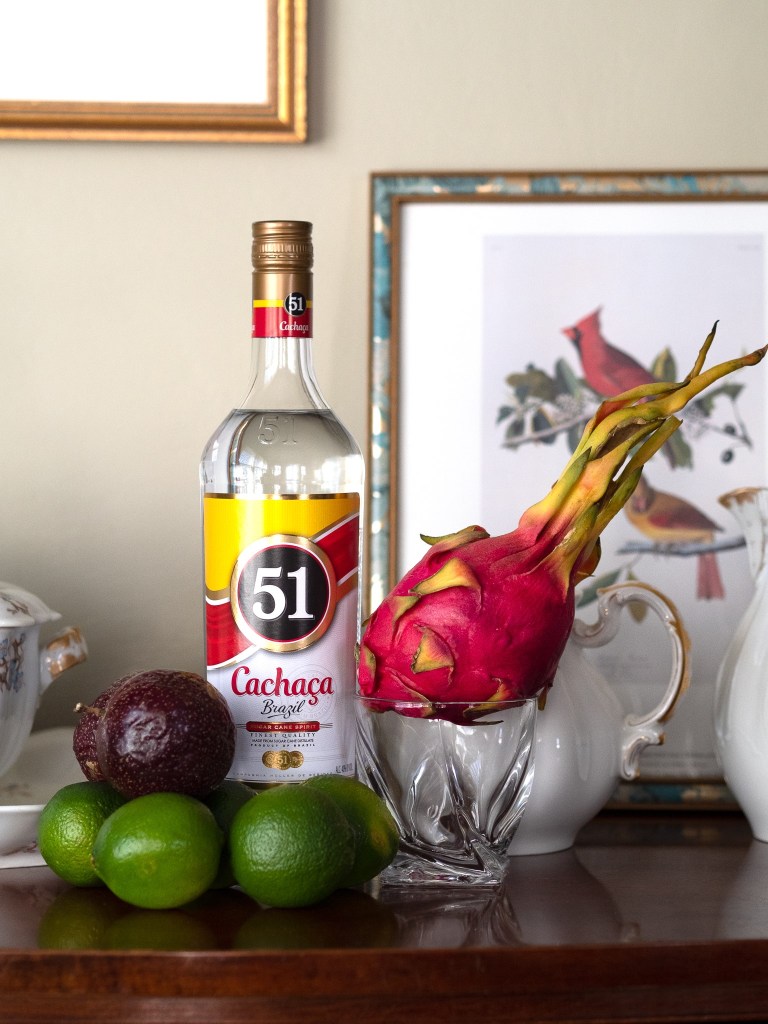
The history of rum is fuzzy on exact dates, but it’s certain that Portuguese colonizers established thriving sugar plantations in Brazil by the 1530s and that some fermentation and distillation of sugar refining byproducts began immediately. The first documented report of a cane distillate came from the governor-general of Brazil in 1532, and sugar planters were distilling cachaça in volume by the dawn of the 1600s—while the British, French, and Spanish were still clearing jungles on Caribbean islands to plant sugarcane. Productive sugar plantations in the Caribbean only emerged with the arrival and assistance of seasoned Dutch migrants and planters driven from Brazil by the Portuguese as they overtook the entirety of Brazil in 1640.
Based on which came first and who taught whom how to make it, as a writer for the trade publication Distiller once put it, “rum is perhaps more like a Caribbean cachaça, than cachaça is a Brazilian rum.” Or …
“Cachaça is rum, Jim, but not as we know it.”
There are at least three general categories of rum: full-bodied, molasses-based “English style” pot still rums; lighter-bodied “Spanish styles”—molasses-based and made with column stills; and the “French style” agricultural rums made directly from fresh, unrefined sugarcane juice. Cachaça belongs in the French style column, with its aromatic, grassy notes that closely reflect the terroir where the source cane grew.
Unaged cachaças (“silver” cachaça) are water-white and full of grassy and floral notes, but they can also have aromas and flavors that are, as a friend of mine described them, “a little off-putting” due to the strength of the cane flavor itself and even a hint of sulfur. I hasten to add that the same is true of Rhum Agricole Blanc (also unaged) and, for that matter, “white dog”—bourbon right out of the still, before it enters a barrel. Silver cachaça, though, is easier on the palate than on the nose, rather like some very popular soft cheeses, and it blends wonderfully to make dozens of delicious cocktails.

But let us give thanks for the miracle of aging spirits in wood barrels. There are aged cachaças and Rhum Agricoles that drink as well as any fine bourbon, and one of Brazil’s great resources for cachaça is its incredible variety of native woods that lend an equally incredible variety of flavors and expression to aged expressions of the spirit.
The difference between cachaça and Rhum Agricole
Cachaça and Rhum Agricole are both produced from fresh, unprocessed sugar cane juice, but there are differences. One of the things I enjoy most about rum as a category is the absence of any global standards for its production, which makes for a breathtaking spectrum of styles and flavors. However, within many of the 60 countries that produce rum, there are some stringent local requirements. Matt Pietrek, on his Cocktail Wonk blog, does an excellent job of translating such particulars, so if you’re fascinated by the details, check out his pages on cachaça and Rhum Agricole du Martinique AOC.
Brazil doesn’t restrict the source or variety of sugarcane used for cachaça (Rhum Agricole AOC does), nor does it specify a time limit or strain of yeast for fermentation (Rhum Agricole AOC does). Cachaça allows use of column or pot stills of any size, and it must be distilled in a single pass, while Rhum Agricole employs only column (continuous) stills meeting detailed specifications. Consequently, the proof strength of cachaça is general lower than most Rhum Agricole. There are differences in the levels of congeners and alcohol content allowed for each style. While the Rhum Agricole AOC requires any aging to be done in oak barrels, Brazil gives cachaça producers freedom to use most of its indigenous tree varieties for their barrels.
And on and on. Most importantly, as with bourbon or rye whiskeys in the United States, there is no one flavor of either cachaça or Rhum Agricole; to corrupt an old chestnut, “The proof of the rum is in the tasting.” That said, the sheer number of distilleries and volume of cachaças produced in Brazil dwarfs the numbers of Rhum Agricole producers and production volume from Martinique, Guadeloupe, and the other islands of French influence, and that means a greater variety of cachaça expressions—if only we could get more here in the United States.
 The Libation Lounge
Pingback: Brazil on the rocks: The Caipirinha and its luscious variations | The Libation Lounge