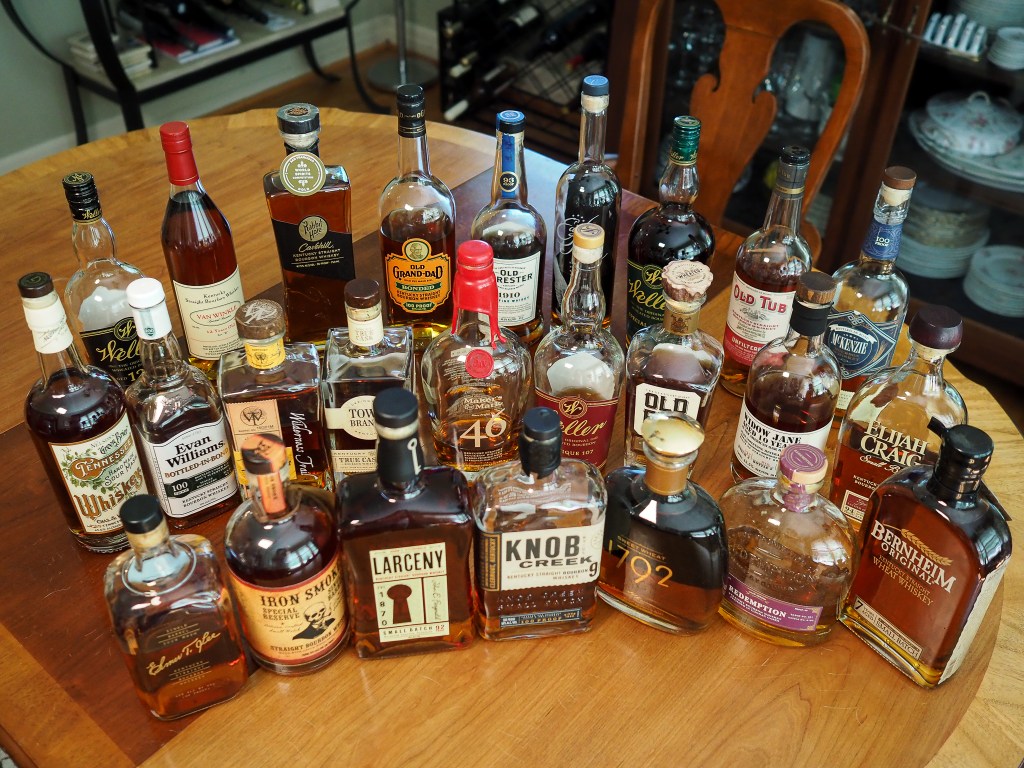
Today, June 14, is best known across the United States as Flag Day, but it is also (not making this up) National Bourbon Day (do you know where your bourbon is?)—a day to celebrate that most American of spirits.
Well, it’s not really the *most* American of spirits. It may be only the second or third most American, if “most American” is measured by originality and longevity. I’d argue that rye whiskey is the most American spirit, as it was being made in the 17th and 18th centuries across the mid-Atlantic and New England colonies, where the cold-friendly rye could thrive.
Colonial New England rum is also a contender for most American, as those colonies were one corner of the so-called triangular slave trade, buying molasses from Caribbean sugar plantations to make rum. However, since the raw material was not indigenous to the North American colonies, I’d rate New England rum as at most a tie with bourbon for most American.
Bourbon only emerged during the early 19th century, with migration of American farmers into what are today Kentucky, Indiana, and Tennessee, where maize grew well and the limestone-filtered water was ideal for the newer type of whiskey.
But however American you consider it, today is bourbon’s day. A couple of fun facts:
In colonial and early America, most farmers who grew rye, wheat, or corn made whiskey with what they couldn’t sell as raw grain. As well as being a popular beverage (if very crude in those years), it was a way to avoid wasting surpluses of their grain.
Whiskey production, including bourbon, was very unregulated and anything but standardized for more than a century. The Bottled-in-Bond Act of 1897, created by none other than E.H. Taylor, was the first law to establish a standard of production and is widely considered the first consumer protection law in the United States.
Bourbon takes its name from Bourbon County, Kentucky, which quickly became the hub of bourbon production and which was named for the French royal family that helped to finance the American Revolution.
 The Libation Lounge