Fellow Americans, not only is this Passover and Easter weekend, it is income tax weekend. Do you know where your return is?

You had to know there’d be a cocktail named for this annual Rite of Citizenship, and here it is. I recommend against indulging in many of these while you prepare your return, but it is a refreshing, citrusy drink—exactly what you might want to accompany your sigh of relief once your return goes in. May you break even this year.
Scroll down for a bit about how to have this kind of fun with your garnishes.
The original Income Tax recipe calls for regular orange juice. I say “blood orange juice if you’re bitter!” Also blood orange if you love it.
(BLOODY) INCOME TAX COCKTAIL
1½ oz Gin of choice
¾ oz Dry vermouth
¾ oz Sweet vermouth
1 oz Freshly squeezed orange juice (blood orange if you’re bitter)
1-2 dashes Aromatic bitters (go easy – the bitters could take over)
Shake all the ingredients with ice and fine-strain into a chilled stem glass. Garnish with a twist of orange zest.
About garnishes and how to make them fun
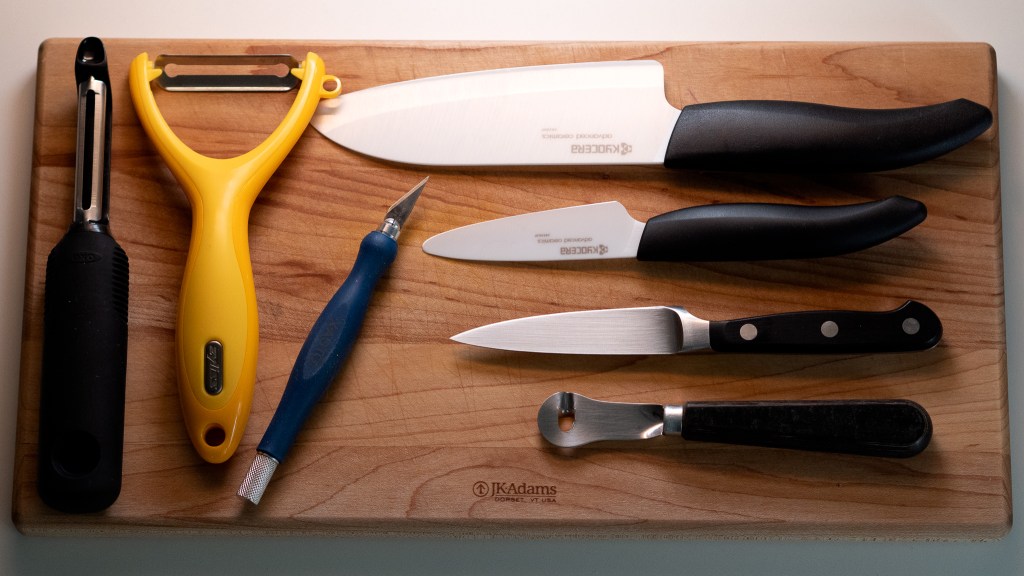
Word to my cocktail fanatic friends: Get yourself an X-Acto knife, a sharp paring knife (I love my Kyocera ceramic knives for this), and a smallish cutting board. Then get a bunch of citrus fruit to practice with, search for “making cocktail garnishes” on YouTube and go to town.
Garnishes don’t get enough attention from most cocktail lovers. They provide three important elements to a drink: Visual appeal, aromas, and—yes—flavors, too. It’s worth learning how to make the best possible use of them; your cocktails will be more enjoyable, and you may even amaze your friends.
Some don’t demand much manipulation—maraschino cherries, olives, or cocktail onions, for example. Just buy good ones and drop them into your drink or spear them first on an attractive pick.
Citrus garnishes take a little more engagement, starting with getting a good peel off the fruit. Skilled professional bartenders can do this with nothing more than a sharp paring knife; good for them. That takes a lot of practice.
I am not a skilled professional bartender, so I use a sharp swivel peeler. That does a great job of getting the oily outer zest off the fruit without including too much of the bitter-tasting pith.
It took me a while to get the hang of expressing the oils from a citrus peel onto a cocktail, but it’s worth learning, because those volatile citrus oils and acids enhance the aromas of the drink—and once you’ve mastered expressing the oils, you can master flaming that peel! That’s possibly the best cocktail trick of all, and flaming the oils as they fall onto the drink produces a pleasant, faint smokiness to its aromas and flavors.
With your X-Acto knife and a wide swath of citrus peel, you can have some real fun. My tips:
Carving a special shape such as that dollar-sign garnish takes some time (and maybe a couple of attempts—slower is faster, when you’re attempting this), so do that before mixing the drink.
For the trickiest ones I do a Google image search to find a picture I can use as a template. As necessary, I’ll shrink the image to the size I need for the garnish and print it out. Then I tape the swath of citrus peel right to the cutting board so it won’t slip around, and I tape the template over the peel so that won’t slip around—except that it may, as you carve more and more of the shape from the peel. So again…take your time and be very deliberate. Slower is faster.
Yes, it’s a lot of work, and I don’t do it very often, but some occasions just require it. Cheers!
Deeper looks here at getting a good citrus peel and flaming it.
 The Libation Lounge