My earlier post about the down side of over-aging bourbon led me to address the question above, which I encounter regularly in my work at Pinnacle Wine & Liquor from customers mulling choices between comparable spirits on the same shelf. It’s come up in front of the rums, the brandies and Cognacs, and all of the whiskies. This is a more complete answer than I ever have time to give in the store.
(As a gin lover, it saddens me that this never comes up in front of the gins—or the vodkas, for that matter—but the plain truth is you’ll likely never have to ask a liquor store associate to unlock a Very Special Cabinet so you can pick out a premium gin or vodka, because with rare exception they aren’t aged—and if they are, it’s not for more than several months. Talk about mixed emotions.)
Setting aside the perceived value of long-established and highly advertised spirits brands (accountants call it “goodwill” and marketers call it “brand equity”), the primary reasons for price differences among spirits in a given category are alcohol content and aging. I would love to hear from actual distillers on this, but I believe the greater of these costs is the aging.
Alcohol doesn’t just happen
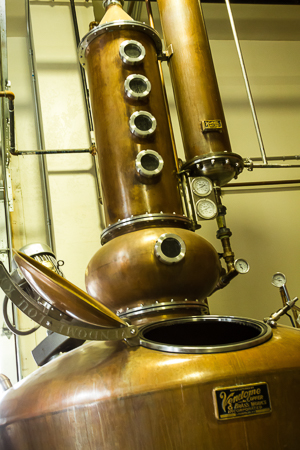
The fermentation and distilling to produce a high-alcohol spirit are large hunks of its underlying cost. Fermentation vats and stills are expensive to buy and maintain (just look at all that copper!), as are the men and women who know how to use them to best advantage, and the process uses a great deal of energy. Roll those costs together and think of them as a price-per-point of the percentage alcohol by volume (abv), and the more alcohol a bottle contains, the more money the distiller needs to get for it in order to cover those costs.
The correlation between proof or alcohol-by-volume and the price of a bottle isn’t entirely perfect—Everclear and Spirytus Rektyfikowany wreck the curve at about $20 for 750 ml of almost pure grain alcohol—but the correlation for spirits you’d actually like to drink is fairly direct. Higher proof asks a higher price, subject to other influences such as raw materials, overhead, and … aging.
Aging whiskey (or any spirit) is a for-profit real estate investment.
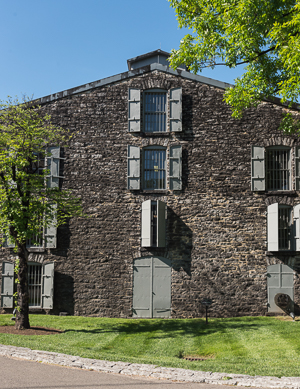
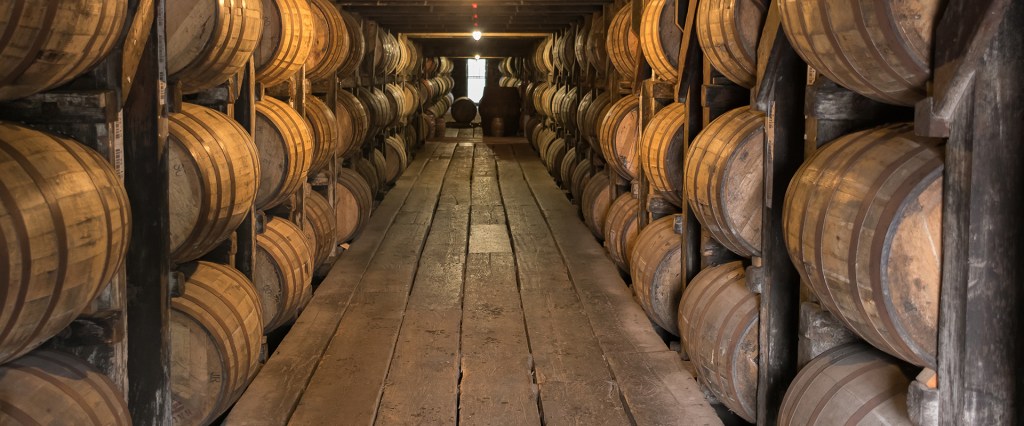
After distilling, the new-make spirit goes into expensive wood barrels that are stored in warehouses (“rick houses,” they’re called in bourbon country) while the whiskey ages. The warehouses and the land they sit on are definitively real estate. So a whiskey producer now has immense assets tied up in liquid, barrels, buildings, and land, and those assets won’t produce a penny of revenue until the whiskey is bottled and sold.
There’s no legal minimum aging requirement for bourbon in particular (there are minimums for Scotch and Irish whiskies), but for most bourbons the aging is more than two years and up to 10 years; the rarer bourbons age from 12 to 25 years or more.
Let’s face it: Even the low end of the aging range is a long time for an asset to sit around without paying for itself while the distillery has to make payroll, utilities, tax, and mortgage payments. More years of aging mean more costs piling up for the unsold product; the producer has no choice but to recover all of that somehow, sometime.
Blame it on those devilish angels, too.
Plus, as whiskey people say, “the angels” take a share of the aging whiskey. About 3-4 percent of the whiskey in an oak barrel evaporates through the wood every year, so after 10 years 30-40 percent of the spirit that went into the barrel is gone and the distillery has less product to sell.
The angels don’t pay for their share, so we do (not very saintly of the angels, is it?). If the producer is going to be profitable and remain in business, they’re going to recover their costs, but for every year that passes before the whiskey’s bottled, there will be fewer bottles to sell and more costs to recover—so up goes the price per bottle.
And those are most of the reasons Booze A costs more than Booze B.
 The Libation Lounge