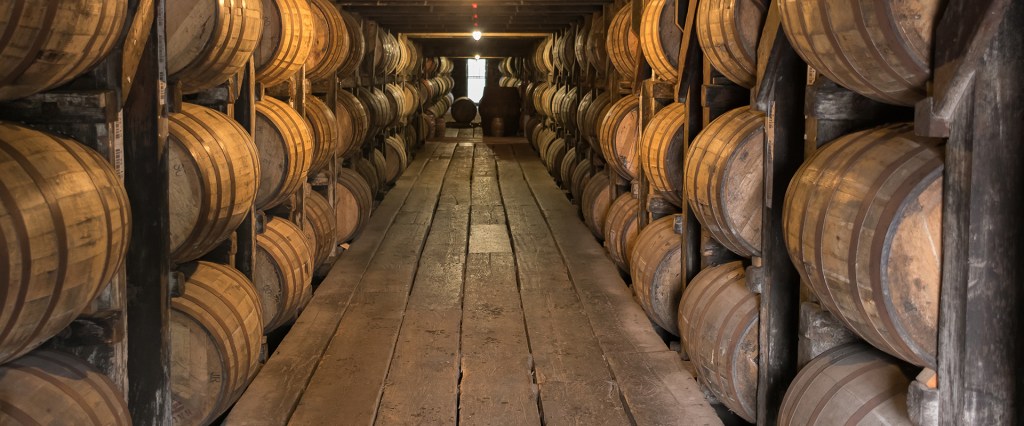
The article linked below, from Punch magazine (“Is There Such a Thing as ‘Too Old’ Bourbon?”), is an interesting discussion. As you read it, keep in mind that it’s specifically about bourbon and that bourbon is only aged in *new* American oak barrels, which are probably the most active aging vessel in the industry. Also, most bourbon (but not all!) is made and aged in the robust climate of Kentucky and Tennessee, with its hot, humid summers and cold, damp winters. Therefore, the conclusions in this article do not apply to all spirits and all barrels in all whiskey-producing regions.
Producers of Scotch, Irish, and other European whiskies tend to age their product in used bourbon barrels or varieties of French and Hungarian oak that are more neutral—meaning the wood itself has less influence on the flavors and aromas of the whiskey—and in significantly cooler macroclimates than Kentucky’s. The rule of thumb is that it takes three years of aging in Scotland’s cooler stone warehouses to equal one year of aging in a Kentucky rick house.
And certain U.S. climates—Upstate New York’s, for example—resemble Scotland’s more than Kentucky’s. One bone I have to pick with whiskey producers here in the Finger Lakes and Western New York is that they typically don’t age their whiskeys long enough. I certainly understand their financial incentives to get their whiskeys bottled and sold, but local whiskeys suffer in comparison to Kentucky’s and Tennessee’s because of that.
From PUNCH magazine: Is There Such a Thing as “Too Old” Bourbon?
 The Libation Lounge
Pingback: “Why does this bottle cost so much more than that one?” | The Libation Lounge